


Perfect Daily Lesson Plan for Teachers in 2026 Easily | Vidhyaa Institute
Writing a daily lesson plan for teachers often causes panic. You stare at an empty grid. You wonder how to pack pedagogical theories into one single hour. Many education students struggle with this exact task daily.
You do not need to struggle anymore. We will build your skills step by step together. A strong daily lesson plan for teachers acts as a reliable roadmap. It guides your students directly to academic success.
The Anatomy of a Perfect daily lesson plan for teachers
A daily lesson plan for teachers needs specific working parts. You must include clear goals, engaging activities, and quick tests. We will explore thirteen core concepts below. Every successful daily lesson plan for teachers uses these exact ideas. They form the foundation of great teaching.
Bloom’s Taxonomy
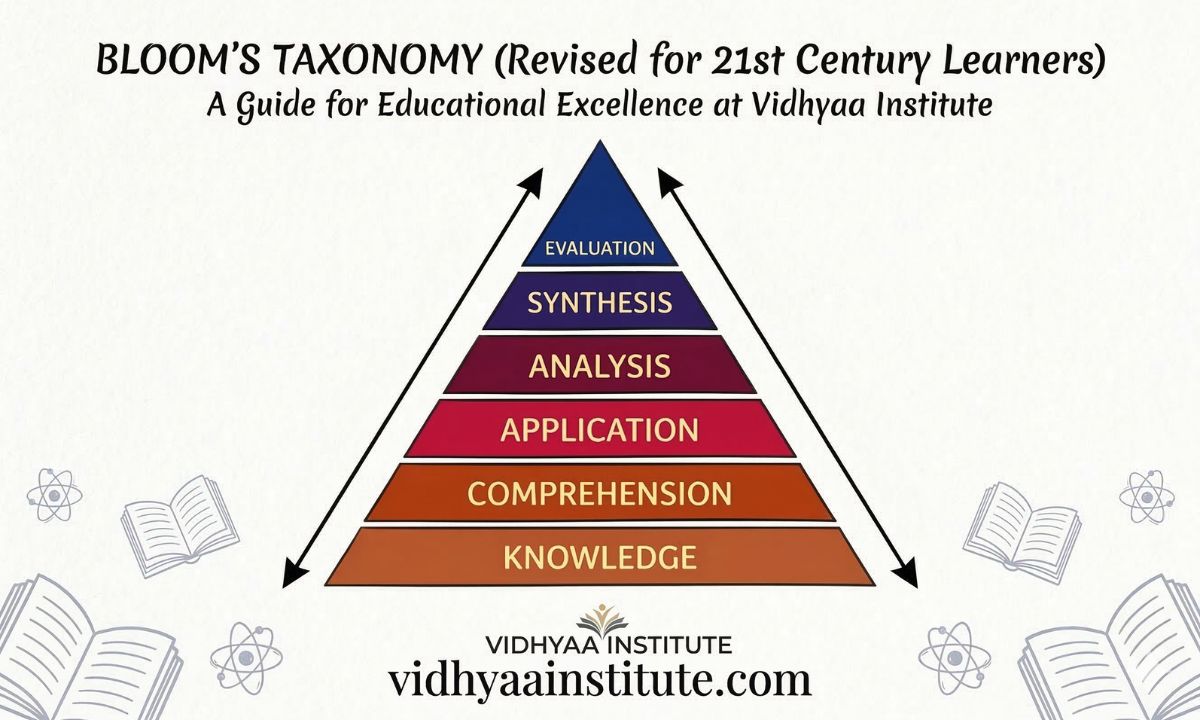
The Simplified Theory: Bloom’s Taxonomy ranks thinking skills like a tall ladder. Students step up from simple memory to complex creation.
The “Why It Matters” Factor: Every daily lesson plan for teachers requires strong action verbs. You use this specific ladder to choose those verbs.
Pro Study Tip: Remember the acronym RUAAEC. Remember, Understand, Apply, Analyze, Evaluate, Create.
Check for Understanding: Can you name the highest level of thinking on this ladder?
The Madeline Hunter Direct Instruction Model
The Simplified Theory: This model provides a strict recipe for teaching a skill. You show the skill, you practice together, they practice alone.
The “Why It Matters” Factor: You will use this exact sequence in your student practicum. A daily lesson plan for teachers often relies entirely on this structure.
Pro Study Tip: Think of the phrase “I do, We do, You do.” This simple phrase saves time during stressful exam writing.
Check for Understanding: What is the final independent step in the Madeline Hunter model?
Vygotsky and the Zone of Proximal Development
The Simplified Theory: The zone is the space between current knowledge and potential learning. Scaffolding acts as the bridge across that wide space.
The “Why It Matters” Factor: A good daily lesson plan for teachers must bridge this exact gap. It ensures students neither panic nor fall asleep from boredom.
Pro Study Tip: Imagine learning to ride a bicycle. Training wheels act as the temporary scaffolding for the rider.
Check for Understanding: How does scaffolding help a student reach a new skill level?
Formative Assessment Techniques
The Simplified Theory: Formative assessment acts like a thermometer during your class time. You take the immediate temperature of student understanding.
The “Why It Matters” Factor: A daily lesson plan for teachers always includes these quick checks. They tell you if you must slow down your teaching pacing.
Pro Study Tip: Use exit tickets at the very end of every class. They provide instant, helpful data for tomorrow.
Check for Understanding: Why do educators consider a quick pop quiz a formative assessment?
Differentiated Instruction
The Simplified Theory: You adjust the content or process to fit different students. You serve the exact same meal but chop it differently.
The “Why It Matters” Factor: Modern classrooms contain diverse learners with vastly varying needs. Your daily lesson plan for teachers must actively support every single child.
Pro Study Tip: Always plan one extra activity for advanced learners who finish early.
Check for Understanding: How do you change a reading task for a highly visual learner?
The 5E Instructional Model
The Simplified Theory: This model uses five phases starting with the letter E. They are Engage, Explore, Explain, Elaborate, and Evaluate.
The “Why It Matters” Factor: Science and math classes use this model heavily. A 5E daily lesson plan for teachers builds deep scientific curiosity.
Pro Study Tip: The “Engage” phase must always happen first. It hooks the student immediately before hard work begins.
Check for Understanding: Which phase requires the teacher to introduce new academic vocabulary?
SMART Learning Objectives
The Simplified Theory: Goals must be Specific, Measurable, Achievable, Relevant, and Time-bound. You must state exactly what will happen today.
The “Why It Matters” Factor: Weak goals ruin a daily lesson plan for teachers. SMART goals guarantee you can actually test the daily learning.
Pro Study Tip: Never use the word “understand” in an objective. You cannot measure invisible understanding in a student.
Check for Understanding: What does the letter M stand for in this important acronym?
Universal Design for Learning (UDL)
The Simplified Theory: UDL provides multiple ways for students to engage, learn, and show knowledge. You build universal ramps instead of exclusive stairs.
The “Why It Matters” Factor: Modern education standards demand strict UDL compliance. A modern daily lesson plan for teachers includes these universal supports naturally.
Pro Study Tip: Always offer an audio version of printed text. This simple step meets many crucial UDL guidelines.
Check for Understanding: How does UDL differ from basic differentiated instruction?
Activating Prior Knowledge
The Simplified Theory: You help students consciously remember what they already know. You connect new facts to old memories.
The “Why It Matters” Factor: Human brains learn by connecting new wires to old wires. A daily lesson plan for teachers must start with this connection.
Pro Study Tip: Use a simple K-W-L chart. It stands for Know, Want to know, Learned.
Check for Understanding: Why must a teacher ask about past lessons before starting new ones?
Summative Assessment Alignment
The Simplified Theory: The daily activities must perfectly match the final exam. You do not teach apples and then test oranges.
The “Why It Matters” Factor: Misalignment confuses students and dramatically lowers test scores. Every daily lesson plan for teachers must point toward the final test.
Pro Study Tip: Write your final unit exam before you write any daily lesson.
Check for Understanding: What happens when daily tasks do not match the final unit test?
Integrating Common Core Standards
The Simplified Theory: Common Core provides a list of required skills for each grade. You must attach these specific codes to your lessons.
The “Why It Matters” Factor: Principals look for these exact codes during teacher evaluations. A professional daily lesson plan for teachers always lists the specific standard.
Pro Study Tip: Do not memorize the long codes. Keep a printed cheat sheet on your actual desk.
Check for Understanding: Why do national standards matter in local classrooms?
The Role of Educational Technology
The Simplified Theory: Technology should enhance learning, not just replace paper. You use digital tools to do things you could not do otherwise.
The “Why It Matters” Factor: Students live in a digital world right now. A daily lesson plan for teachers uses technology to boost engagement.
Pro Study Tip: Always have a paper backup plan. School internet connections often fail without any warning.
Check for Understanding: How does an interactive digital map improve a history lesson?
Classroom Management Integration
The Simplified Theory: You plan your behavioral expectations alongside your academic goals. You script exactly how students will move and talk.
The “Why It Matters” Factor: Chaos destroys even the best academic ideas. A solid daily lesson plan for teachers prevents bad behavior before it starts.
Pro Study Tip: Plan your transitions minute by minute. Silence during transitions saves hours of instructional time over a year.
Check for Understanding: Why should a teacher plan the exact method for passing out papers?
How to Master a daily lesson plan for teachers in 3 Steps
You can master this skill quickly. Choose the track that fits your current schedule. Follow the steps exactly.
-
The 1-Hour Cram: Memorize the Madeline Hunter “I do, We do, You do” structure. Write one SMART objective using Bloom’s Taxonomy. Draft a quick exit ticket for your formative assessment.
-
The Weekend Deep-Dive: Read the Common Core standards for your target grade. Write three connected lessons. Practice writing exact transition scripts to improve your classroom management.
-
The Semester-Long Mastery: Build a complete unit plan. Ensure every daily lesson plan for teachers aligns with the final exam. Integrate UDL principles into every single activity you design.
Frequently Asked Questions about the daily lesson plan for teachers
Do I really need to write a daily lesson plan for teachers every single day?
Yes. You need a written plan every day during your early career. Experienced teachers write shorter plans, but they still plan every day. A blank plan leads to a chaotic classroom.
How long should it take to write a daily lesson plan for teachers?
A new teacher might spend forty minutes on one plan. An experienced teacher might spend only ten minutes. Speed comes with consistent practice and clear templates.
What is the most important part of a daily lesson plan for teachers?
The objective is always the most important part. You cannot teach well if you do not know the destination. The objective guides every other choice you make.
Can I change my daily lesson plan for teachers during the actual class?
Yes. You must adjust your plan if students look confused. Formative assessments tell you when to pivot. Good teachers abandon bad plans instantly to save the lesson.
Read More Article: Relationship Between Teaching and Learning
Read More Article: Importance of Learning through Experience | Vidhyaa Institute